The six-month programme was built around three core principles: learning, to strengthen both practical skills and interpersonal leadership capabilities; visibility, to increase recognition of participants’ potential and open doors to new opportunities; and support, to create an enabling environment where participants could grow and thrive.
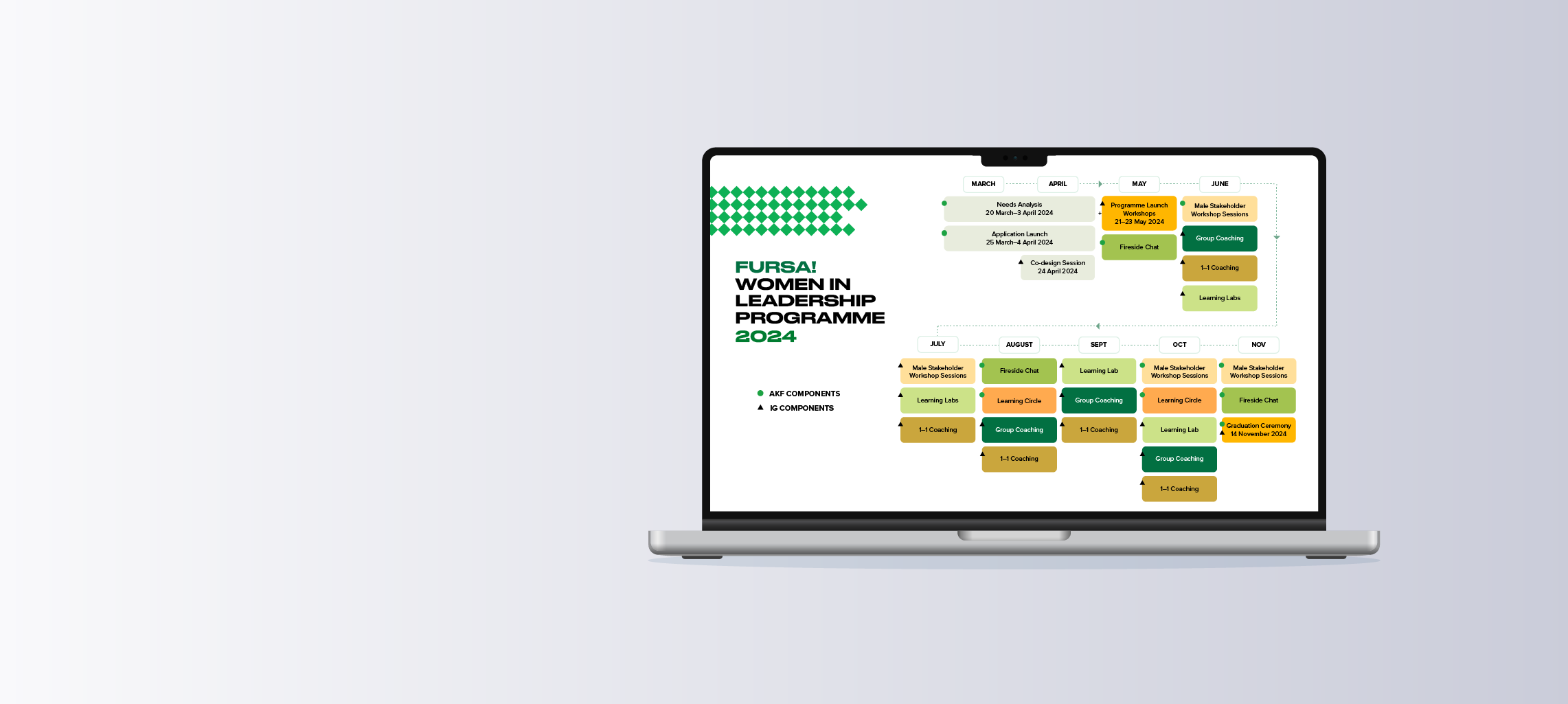
The programme launched with a three-day in-person workshop that brought participants together to explore core leadership themes, build trust and community and set the tone for the months ahead. The workshop culminated in a team leadership challenge, where participants worked in groups to pitch collaborative solutions.
The challenge provided participants an opportunity to apply their learning in practical, purposeful ways over the six-month period, while also making a positive contribution beyond the programme itself. It also held AKF's SMT accountable as each of its members volunteered to be a sponsor for a leadership challenge to ensure its implementation and success.
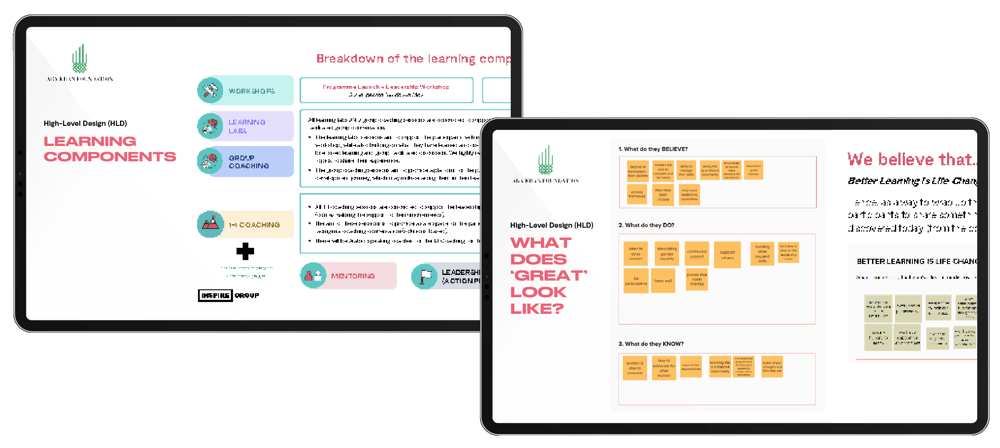
Following the workshop, the programme continued through a series of virtual engagements. Inspire Group led learning labs, group coaching and 1:1 coaching, while AKF facilitated learning circles and fireside chats, as well as sessions with Fursa! line managers and all staff with supervisory responsibilities on gender awareness. Together, they introduced a mentoring component that paired participants with senior female leaders across the organisation to support and help develop their team challenges.
These elements reinforced learning, raised participants’ visibility across the organisation, and sustained support throughout the programme, encouraging reflection and action.
In parallel, a dedicated male stakeholders’ workshop was conducted to equip AKF's senior male leaders with the tools, insights and language needed to champion inclusive leadership. Involving them early on and keeping them engaged in the programme was key to fostering a culture of allyship and shared responsibility.
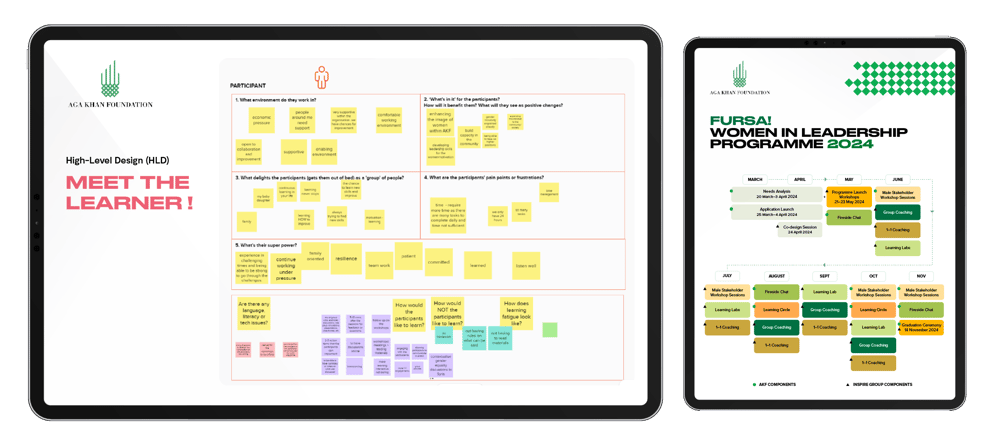
Creating a safe space for participants to share challenges they face specifically as women, was also very central to the success of the programme. Through inclusive facilitation, culturally relevant storytelling and the use of Arabic during fireside chats, participants were able to reflect deeply, share authentically and explore the challenges of leadership in the localised context.
The programme concluded with a visible and meaningful graduation ceremony, bringing together participants, leadership and key internal and external stakeholders – celebrating not just skills gained, but the rise of a confident and connected community committed to leading with empathy and impact.