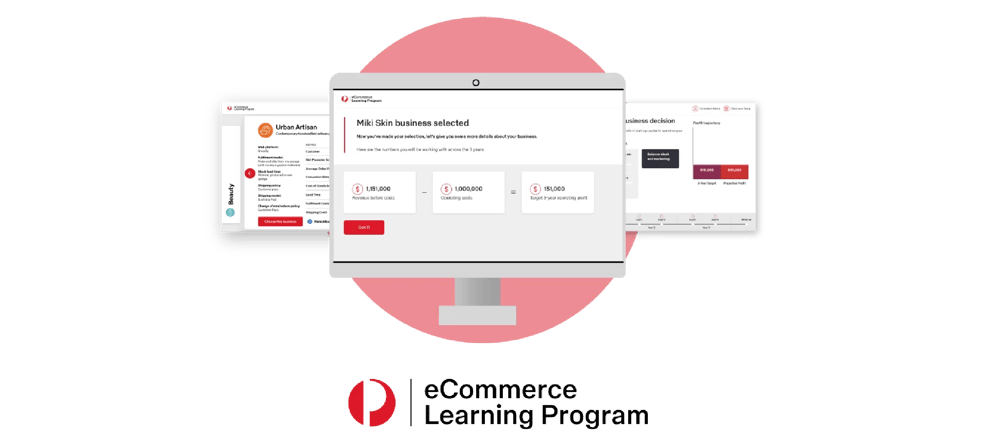
Matt from Australia Post recalls, “When we were designing the digital version of the game, one of our sales leaders said to me, ‘We don't want people to simply click their way through, and say they're done. We want them to stop and think.’”
The learning game design process moved through five phases over a period of seven months.
1. Initial briefing meeting
Australia Post started by briefing Inspire Group on the context for the original face-to-face facilitated game and their goals for the digital version for their wider team.
The original game has many elements. There is a game board, several spreadsheets including a P&L, and live facilitation over two days, followed by a full-day team debrief. It is a rich, immersive introduction to running an eCommerce business, essential for sales consultants who need to act as eCommerce shipping experts and trusted partners.
The new digital game’s goal is to open the team’s eyes to the challenges of running such a business, sparking greater empathy for their eCommerce clients, and helping them understand how this new knowledge is linked to their roles. For salespeople, new and existing, the goals remain building knowledge and empathy for eCommerce customers and driving deeper value-added conversations.

2. Refine game structure and test simplified approach
Inspire Group attended a facilitated session of the original game to observe players’ behaviour, see where facilitators placed their focus, and identify the non-negotiable, fundamental aspects of the game. This drove their recommendations for the digital evolution of the game.
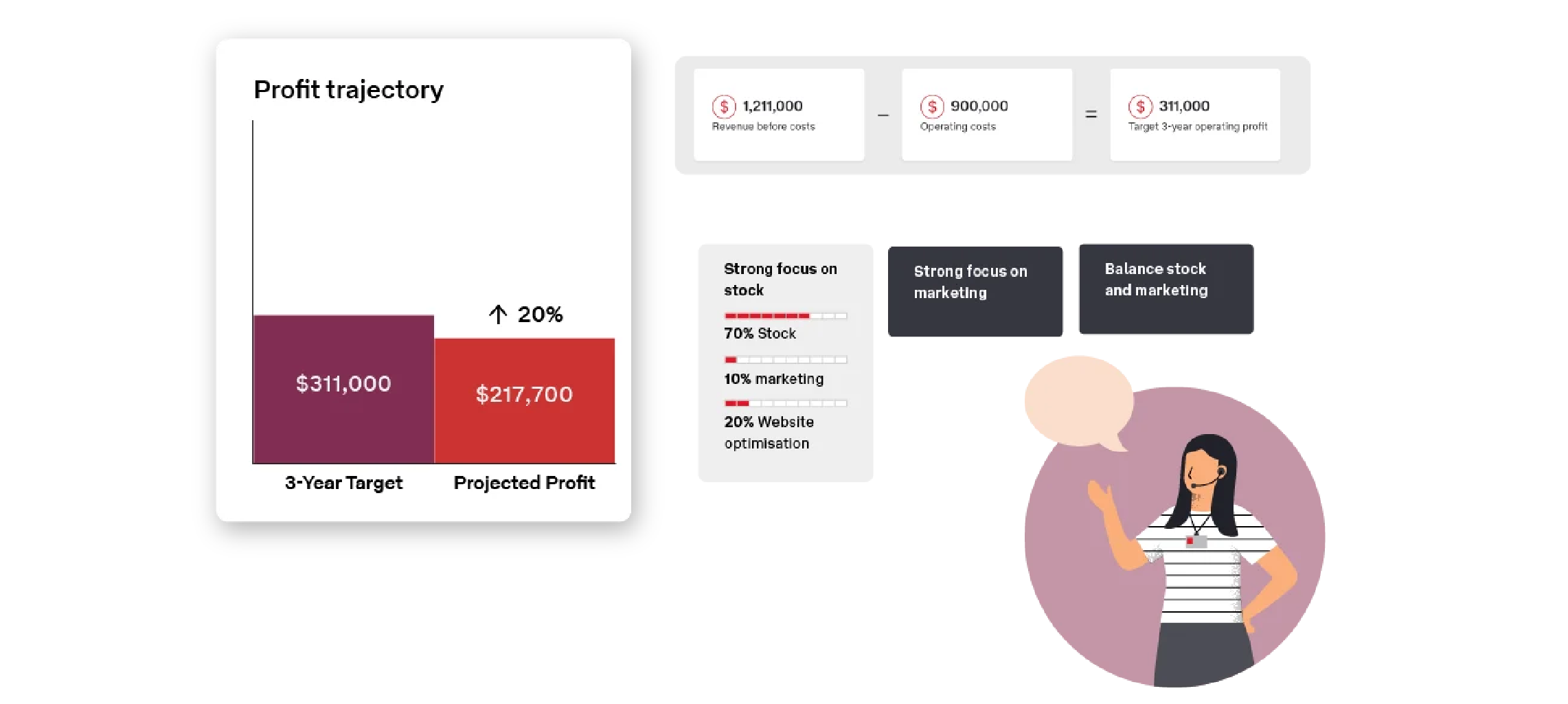
Those recommendations included reducing the number of variables in the game scenarios, simplifying the gameplay elements and specifying a set time frame for the game. Players choose an eCommerce business to run, then try to maximise profits by making smart decisions over a fixed period. The overarching concept is the same in both games, but the digital game has far less complexity.
A simple mock-up illustrated how the streamlined game would operate. This gave Australia Post the confidence to keep moving forward and gave Inspire Group the parameters to scope project cost and milestones.
3. Collaborative design
The game design and development was a collaborative, iterative process. Inspire Group set up a digital whiteboard, mapped out slices of the game and sense checked them with Australia Post and the game developers. Testing key aspects of the game early on with developers ensured ideas were feasible and could be delivered on time and on budget.
Once game storyboards were mapped out and approved, Inspire Group moved on to graphic design. They were working within the parameters of a well-established visual brand, so designing the look and feel for the game was another iterative collaboration with Australia Post’s graphic design lead.
4. Build and test for usability and accessibility
Storyboarding complete, Inspire Group built the first iteration of the game. This was tested with a team from Australia Post to identify any confusing content and any places where players didn’t understand how to proceed. Testers gave feedback, which led to further rounds of updates and testing, including testing for failure to ensure the game is robust enough to handle traffic from thousands of Australia Post employees.
Australia Post is a government enterprise, so it's critical they meet accessibility guidelines. The learning game is primarily played on desktop and tablet, so Australia Post agreed to compromise on certain 2.1 mobile standards in favour of optimising the desktop experience, however the game is WCAG 2.0 accessible, and a round of accessibility testing was central to the build.
5. Learning game launch
Following design sign-off, Inspire Group created a few additional learning assets, such as a facilitation guide to support team leaders to run group sessions. Then the game was launched.
Australia Post Learning Partner & project lead, Matt White, comments on the quality of the design process. “Inspire Group made it very easy to make hard decisions about what we included and what we didn’t because they understood what we were trying to do. The process we went through was rock solid. We used our shared whiteboard. We iterated well. We jumped on a call to workshop anything we needed to. Inspire Group worked well with the consultants who designed the original game, being open to their ideas and using their eCommerce expertise and critical eye.”